

3 Water-Based Triglav National Park Attractions That Deliver the Biggest “Wow”
Triglav National Park attractions often get listed as separate pins on a map, but the most memorable visits usually follow one simple pattern: water first, then rock, then open space. In the Julian Alps, water is the force that makes the landscape feel dramatic without requiring extreme hiking. It cuts gorges that you can walk through on maintained paths, it drops over cliffs in waterfalls you can reach on short trails, and it runs through narrow canyons where the color becomes unreal on clear days. That is why “water-based” sights are the safest bet if you want high impact with predictable logistics.
This guide focuses on three Triglav National Park attractions, water experiences that feel genuinely different from each other, and cover two main gateways into the park and its surroundings: the Bled side and the Soča side. You can do them as separate half-day trips, or combine them across a longer stay. If you are trying to see a wider set of highlights in a single day without building the itinerary yourself, a structured tour can be the more efficient option, especially in peak season when parking fills early and small timing mistakes cost a lot of time.
If you want a curated day that combines multiple “headline” Triglav National Park Attractions into one route, check the 7 Alpine Wonders Triglav National Park Tour. It is useful as a planning shortcut because it bundles several major settings into a single schedule, reducing the guesswork around sequencing, driving time, and stop order. It is also a good benchmark for anyone comparing options, since it shows what a “full coverage” day typically includes beyond the three water highlights below.
Let’s start with a waterfall, one of the simplest ways to experience the water-shaped landscape that defines this part of Triglav National Park. Virje is a good first stop because the walk is short, the scenery is immediate, and it gives the route a strong opening without adding complicated logistics.
Virje Waterfall (near Bovec), the most Accessible of Triglav National Park Attractions
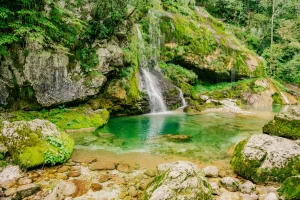
Virje Waterfall is one of the most straightforward water-based stops on the Soča side of Triglav National Park. It sits near Plužna, close to Bovec, and it is popular because the payoff comes quickly. The approach is short, the terrain is not technical, and you get a classic Soča Valley combination: bright turquoise water, mossy rock, and a compact waterfall that feels “close” rather than distant.
Plan Virje as a focused stop that takes about 45 to 70 minutes total, depending on parking, walking pace, and how long you stay near the pools. The best way to keep it smooth is to treat it like a short out-and-back walk with one main viewing area. In high season, the main constraint is not distance but space at the pools. People tend to linger here longer than at quick viewpoints, so the area can feel busy even when the trail is short. If you arrive and the main spot is crowded, your easiest fix is to wait a few minutes and let one group clear out before you settle in.
Conditions matter at Virje. After rain, trails can be wet and slippery, and the ground near water can be slick. Wear shoes with grip and avoid stepping onto unstable edges. If you are traveling with kids, this is a place where clear boundaries help. Keep them on stable ground and do not treat the waterline as a play area when it is crowded.
If you are planning to visit, make sure to read this Virje Waterfall Slovenia Visitor’s Guide. It covers the best access options, what to expect on the short walk, and how to plan your visit so your stop is smooth and well timed.
Virje gives you the Soča Valley’s signature color in a compact format. If you want the next water attraction to feel more dramatic and canyon-like, move on to a Peričnik Waterfall adventure where the river is squeezed between rock walls.
Peričnik Waterfall: Hike Behind the Cascades
Peričnik is one of the most recognizable waterfalls in the Triglav region, and it works so well as an “attraction” because it combines a strong landmark with a manageable hike. This is not a roadside viewpoint that you glance at and leave. The walk in is part of the experience, and the waterfall feels bigger as you get closer because the sound and spray increase gradually. If you want one waterfall stop that feels like a real outing without turning into an all-day trek, this is the best fit.
Plan the visit like a short hike with a start point, a sequence of viewpoints, and a finish. Budget enough time to walk at a normal pace and stop without feeling pressured. Trail conditions can vary a lot depending on rain, temperature, and season, so footwear with good grip is a practical requirement, not a “hiking enthusiast” detail. Also, access logistics in the wider Vrata Valley area can change, especially in busy periods, so it is worth checking the current approach rules before you commit to the drive.
What distinguishes Peričnik is its vertical drama. You see water falling from above rather than running beside you. It is also one of the best places to slow down without trying to “make the stop longer.” The waterfall gives you a natural reason to pause. The goal is not to rush in, take a photo, and rush out. The goal is to do the full viewpoint sequence and leave when it feels complete.
If you want to arrive smoothly and avoid the most common mistakes, see this Peričnik Waterfall guide. It covers the current access approach, parking options, and updated Vrata Valley shuttle bus information.
After Peričnik you have the “waterfall” box checked. The next water highlight is about color and movement through a gorge, and it belongs on the Soča side where the river landscape feels completely different.

Great Soča Gorge: Emerald Green River
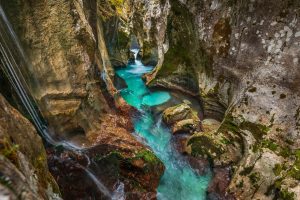
The Soča River is famous for its color, but you only understand why when you see it in a constrained section where rock shape and depth intensify the turquoise tone. Great Soča Gorge is one of the strongest examples of that effect. It is a water attraction that feels less like a “walkway experience” and more like a natural corridor you approach carefully, because terrain near river edges can be uneven and slippery. This is a place where good judgment matters more than distance.
Treat Great Soča Gorge as a viewpoint-based stop with short movement between lookouts. You do not need to turn it into a long hike to get the reward. The main planning decision is not how far you will walk, but how you will fit the Soča side into your overall trip. It is easiest if you are already based in the Soča Valley, or if you are crossing the mountains via Vršič Pass and want one clear “headline” stop on the river. If you are trying to add it to a day that also includes Bled-area attractions, be realistic about driving time. The Soča side is not “next door” in the way it can look on a map.
Great Soča Gorge is also the most sensitive of the three water attractions in this guide. Crowds and noise can change the feel quickly, and safety becomes more important when people push for closer angles near water. Your content should reinforce simple rules: stay on safe ground, avoid risky edges, and accept that the best view is the one you can enjoy without stress.
For a clean, safe plan that reduces guesswork, visit the Great Soča Gorge guide. In that article you can specify the best viewing points, where people commonly underestimate footing, and how to plan timing so the stop feels like a highlight rather than a rushed add-on. That kind of guidance is what separates a good Soča visit from a stressful one.
How to Choose the Right “Water Trio” for Your Trip
These three Triglav National Park attractions work well together because each one shows a different side of the region’s water landscape. Virje Waterfall is a short, accessible stop with emerald pools and a strong visual payoff. Peričnik Waterfall adds a more dramatic vertical setting and a proper waterfall hike feel. Great Soča Gorge brings in the turquoise river scenery that makes the Soča Valley so distinctive.
If you are staying near Bovec or on the Soča side, Virje and Great Soča Gorge are the easiest pair to prioritize. If you are based in Upper Carniola or closer to Mojstrana, Peričnik may be the more practical choice. If you have enough time to combine all three, the result is a varied route that covers pools, waterfalls, and river canyon scenery without repeating the same type of stop.
The main advantage of this combination is variety. You are not just collecting waterfalls. You are seeing three different ways water shapes Triglav National Park and its surrounding valleys. That makes the trip feel broader, more balanced, and more memorable than a generic list of random attractions.